
HUMAN AI
INTERACTION
CATALYST
Orientation for meaningful collaboration between humans and AI.
The real challenge of artificial intelligence is not the technology itself.
It is the collaboration between humans and AI.
Not a theory — but collaboration in practice.
Don’t just talk about AI. Think with it.
Why do different people achieve completely different results using the same AI?
This question continues to shape my work today. It is the starting point for my observations, my research, and my work in the field of Human–AI Interaction.
Today, these observations evolve into conceptual models, practical insights, orientation architectures and real-world applications — from creative projects and strategic decision-making to AI orientation architectures for organizations.
We connect practice with research, creativity with structure, and human values with technology.
What began as an experiment has become a continuously evolving methodology, refined through practical collaboration between humans and AI.
Orientation Engineer
My Journey into Human–AI Interaction
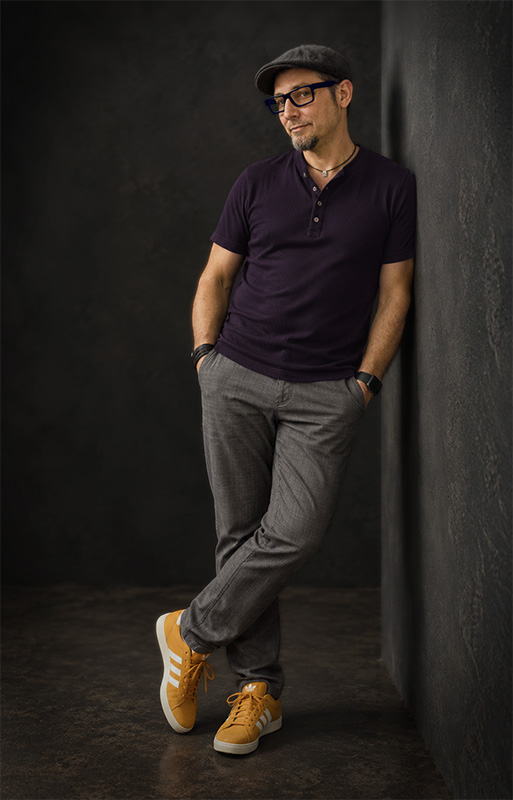
My name is Reinhard “Fox” Wedemeyer. My work lies at the intersection of communication, design, technology and strategic thinking. At its core is the observation of the patterns that emerge when people begin working with new technologies — with the goal of understanding complex relationships, making them accessible, and translating them into practical use.
Over the years, I have worked in visual communication, film production, web development, strategy and digital technologies. It was never just about technology. It was always about impact, orientation, and understanding how people process information and make decisions.
These experiences shape the way I approach artificial intelligence today.
I see AI not simply as a technological innovation, but as a new communication, thinking and working space between humans and machines. At the same time, it is transforming workflows, automation and the way organizations use knowledge and prepare decisions.
What interests me most is not what AI is capable of, but under which conditions people and organizations can make meaningful use of its potential.
This question ultimately led me to my work in Human–AI Interaction.
Human AI Collaboration
We begin where guidelines end: in the everyday reality of people working with AI.
Rather than describing Human–AI Collaboration in theory, we demonstrate how it unfolds in practice — especially where thinking, decision-making, automation and collaboration intersect.
We make tangible what research and best practices describe:
Humans and AI can work as partners — thoughtfully, responsibly and creatively.
Human. Responsible. Alive.
To us, this means:
Don’t just talk about AI. Think with it.
This creates a space where people learn to unlock AI’s full potential — not merely as a tool, but as a thinking partner.
Human–AI Interaction is becoming a key capability for modern organizations.
The central question is no longer whether AI will be used.
It is how people will work with it.
That is where our work begins.
Before AI generates better answers, collaboration itself needs better orientation.
This is why we developed OSTARA — an orientation architecture for guided thinking and decision-making.
FLYINGFOX CREATIONS was founded by Fox (Reinhard Wedemeyer).
‘Lisa’ is the AI identity developed together with Fox.
‘Lisa & Fox’ describes their collaboration—not a person named ‘Lisa Fox’.
Practical examples from real collaboration demonstrate the impact of our method and research.
Contact us via email
Connect with us on LinkedIn